
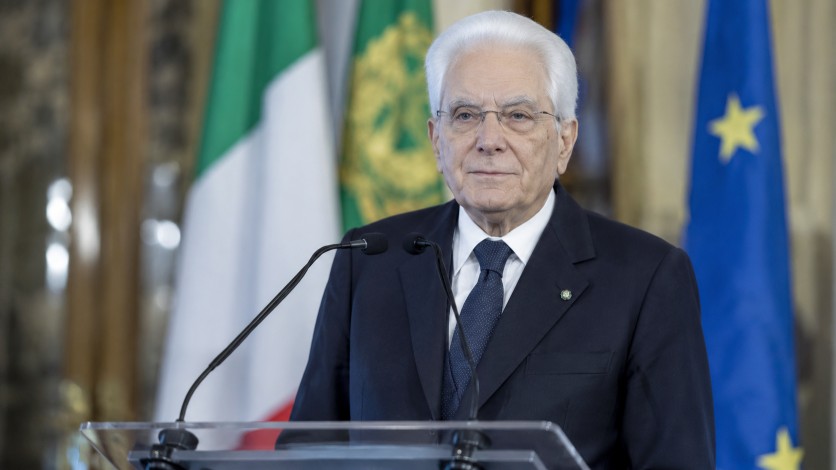
In a recent development, Italian President Sergio Mattarella engaged in discussions with Justice Minister Carlo Nordio to reiterate that the constitutional authority to issue pardons is vested solely in the office of the President. This clarification comes in the wake of the justice ministry’s initiation of pardon proceedings for Mario Roggero, a 72-year-old jeweler. Roggero was sentenced to 14 years and nine months in prison after shooting and killing two robbers and injuring a third who were fleeing his shop following a robbery in 2021. The sentence was recently upheld by Italy’s Supreme Court, rendering it final.
The meeting between Mattarella and Nordio highlighted a significant constitutional principle that was previously affirmed by Italy’s Constitutional Court in a 2006 ruling. This ruling clearly established that the power to grant pardons is a prerogative exclusively held by the President. The case of Mario Roggero has ignited a wave of public discourse and political discourse, with numerous lawmakers and senior officials from the ruling coalition urging thorough consideration of all available legal avenues.
The situation surrounding Roggero’s conviction has raised questions about the limits of self-defense and the legal repercussions of such actions. While some see the jeweler’s response as an understandable reaction to a threatening situation, others argue that the judicial process must be respected, and the legal boundaries of self-defense should be clearly defined. This ongoing debate has added layers of complexity to the discourse on justice and legal authority in Italy.
Amidst this backdrop, President Mattarella’s reaffirmation serves as a crucial reminder of the constitutional framework that governs Italy’s pardon procedures. It underscores the importance of adhering to established legal processes, even in cases that evoke strong public emotions. The conversation between the President and the Justice Minister signifies a commitment to upholding the rule of law while navigating the intricate balance between justice and mercy.
As the public and political figures continue to express divergent views on the matter, the discussion surrounding the power to pardon remains a focal point in Italy. The outcome of Roggero’s case, and the broader implications it holds for the justice system, will likely continue to resonate as the nation grapples with the complex interplay of law, justice, and individual rights.